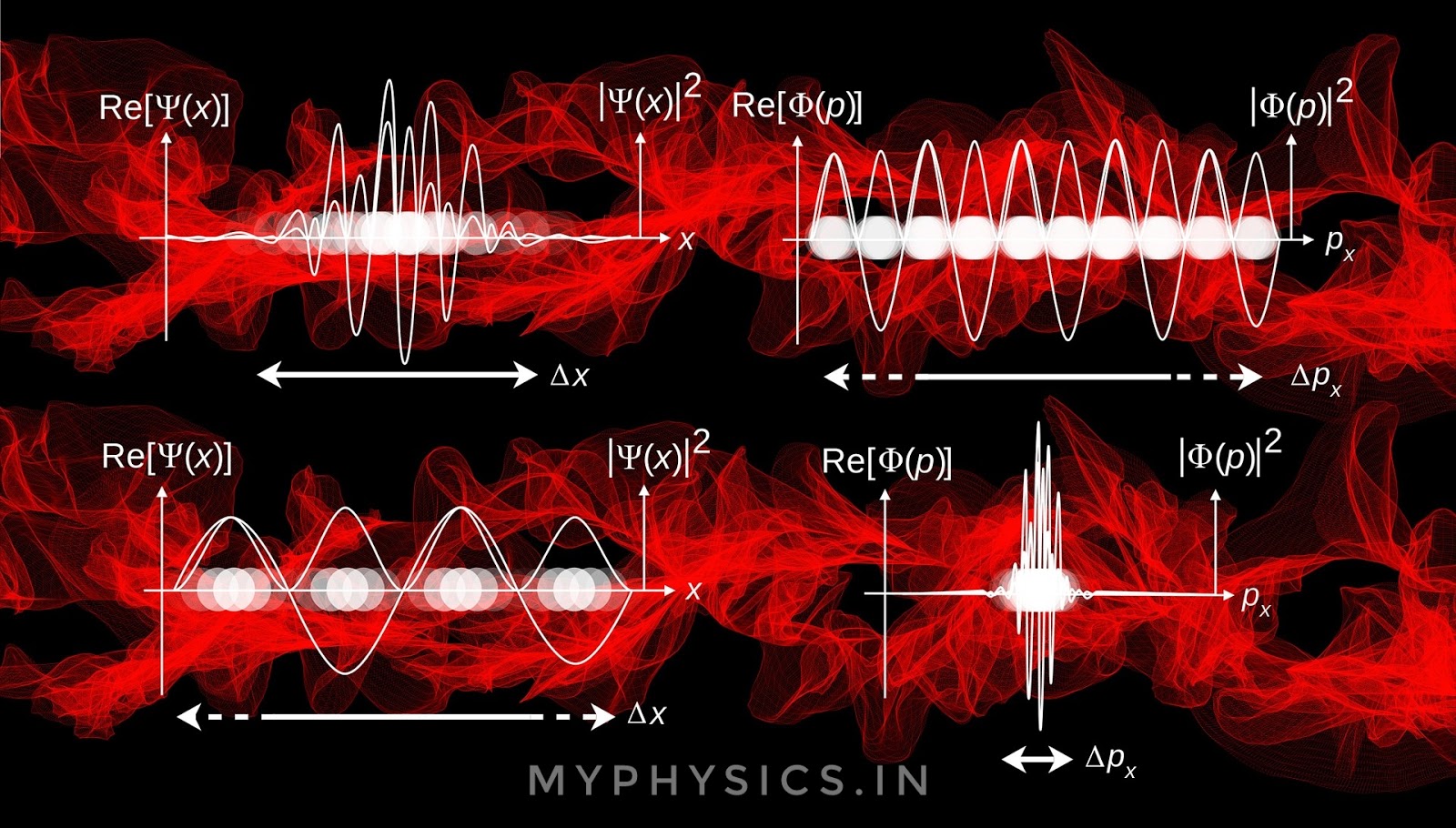
In sharp contrast to classical physics, quantum mechanics is an entirely new outlook of interpreting the behaviours of submicroscopic world on the idea of an essential discontinuity—the quantum. It gives us a radically new world-view and has revolutionised the way of our thinking about the world. We have already learnt this from the prologue.
The discovery and the development of quantum mechanics started along two different paths. One was based on the realisation that the allowed values of energy-exchange occurring between subatomic bodies are not continuous but rather discrte and involve quantum jumps. The progenitor of this path is Planck who, through his work on black-body radiation, led to its very foundation. A boost to it was given by Bohr in his theory of hydrogen atom and was carried to culmination by Heisenberg through his matrix version of quantum mechanics.
 The Big Bang